"Due to our community's narrow, winding, and often steep roads, the issue of how we address snow in our community is of particular importance." That line comes from the Summit Park Homeowners Association's annual newsletter, the Park Lark. The newsletter says it runs the article every year, and for good reason.
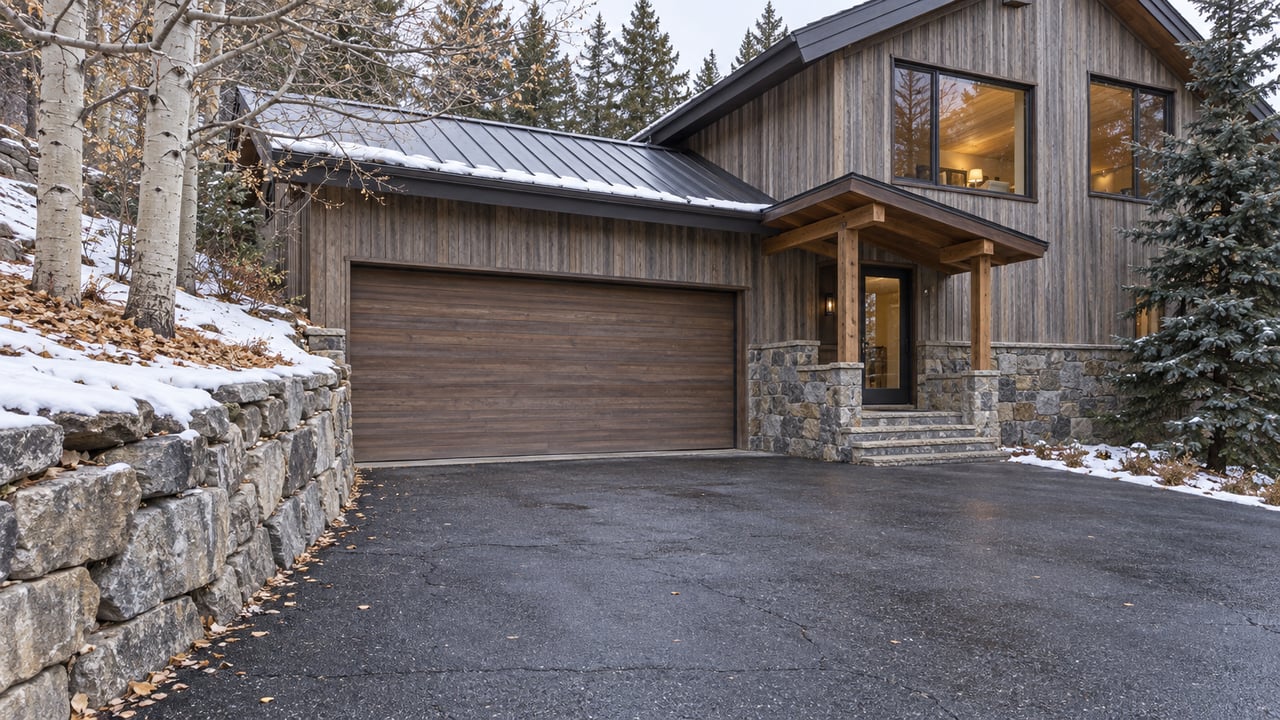
Summit County's winter rules come down to one idea. From Nov. 15 to April 15, the public road belongs to the plow. Your cars, your guests' cars and every shovelful of snow from your driveway have to fit on your own property. On wide, flat streets that rule hardly comes up. On Summit Park's switchbacks, how much room your lot has decides how winter goes.
The Five-Month Window
Summit County's winter safety reminder gives the rule plainly: "No on-street parking on County roads (unless otherwise marked by the County) between November 15th and April 15th." Vehicles or other obstacles that get in the way of snow removal "will be towed or removed at the owner's expense." The rule cites Summit County Code 7-3-3.
Liability falls on the car owner. The county says it does not take responsibility for damage to vehicles parked on the street during the restriction. If a plow is damaged by hitting an illegally parked car, the vehicle's owner is responsible.
The Park Lark applies the rule directly to Summit Park. With few exceptions, the newsletter says, no on-street parking is allowed in the neighborhood during that window unless signs say otherwise. Vehicles that block plows or emergency vehicles can be "ticketed or towed at the owner's expense." The Park Record and TownLift both reported the same Nov. 15 to April 15 dates when the restriction last took effect. If you have an older HOA welcome packet with different dates, go by the county's current rules and any posted signs.
This matters most when you have company. A relative's car pulled onto the shoulder for Thanksgiving dinner falls under the same rule as any other parked car. With the street off the table from Nov. 15, every guest car has to fit in your driveway or on another property where you have permission. Snow takes up driveway space as the season goes on, so that room shrinks.
Where the Driveway Snow Goes
The second rule shrinks that space. Snow from your property has to stay on your property. Summit County's code sheet for section 7-3-4 says owners, condominium associations, homeowners associations and their agents must store snow on their own premises. They may also store it on someone else's property with that owner's permission.
The road gets a wider buffer than most people expect. The county's sheet for section 7-3-5 makes it unlawful to deposit private snow in the traveled part of a public street in a way that impedes traffic. It defines the traveled way as the paved or graveled surface plus 10 feet on each side. The county's winter reminder puts it more broadly: property owners "may not push, blow, shovel their snow out onto the County road or into the County right-of-way."
The Park Lark explains what happens on a narrow road when someone breaks this rule. Snow pushed into the street "often ends up in front of a neighbor's driveway as plows pass by." On a narrow road, that pile becomes the next household's problem.
So the parking rule and the storage rule compete for the same space. The spot where you piled January's snow is a spot a car can't use in February. Before the first big storm, it helps to decide where the piles will go so the second car still has room.
The Plow Clock
The county's snow removal hours are 4 a.m. to 10 p.m. Operators can drive up to 11 hours in any 24-hour period and up to 60 hours a week. The Park Lark explains how crews are staffed during a long storm:
"When a storm rolls in overnight, all operators report at 4 A.M. If a storm rolls in during the night and continues throughout the day, the number of crews will drop by 1/3 beginning at 12:00 P.M. and move back to 2/3 capacity beginning at 4:00 P.M. When the number of plow crews are reduced, focus is on main roads and not residential streets."
| Storm timing | What the county and HOA describe |
|---|---|
| Overnight snowfall | All operators report at 4 a.m. |
| Storm continues past noon | Crews drop by a third starting at 12 p.m. |
| Reduced crews | Main roads come first, residential streets later |
| After 10 p.m. | Outside the county's posted snow removal hours |
On a side street in Summit Park, a midday storm and an overnight storm play out very differently. Snow that falls overnight meets a full crew at 4 a.m. Snow that keeps falling into the afternoon meets a smaller crew working the main roads first. On those afternoons, a car left on the street sits right where a returning plow has to work.
The Right-of-Way Is Plow Territory
Anything in the county right-of-way is at risk once the plows start. The county's reminder says landscaping, mailboxes, markers and other items in the right-of-way are "at risk," and that damage to them "will not be the responsibility of the County," citing code 7-3-10. If one of those objects damages county equipment, the property owner may be responsible for that too.
Hydrants and utility structures need tall markers. The county says they should be marked with a pole or sign that reaches well above normal snow depth, with a six-foot minimum, so crews can find them when they're buried. The Park Lark adds that hydrants should be cleared at least three feet on all sides within 72 hours of being buried by a plowed windrow or drifting snow.
The county also lists a few street-level reminders. Watch for plows when walking or riding, since drivers may not see you. Don't run into the road to flag one down. And don't let children dig snow forts in the roadside berms, because a plow could push into those piles at any time.
Trash Day After a Storm
Trash carts take up space at the curb too. In late 2025, KPCW reported that Republic Services asked customers to keep lids closed, avoid overfilling, and put carts out the morning of pickup instead of the night before when snow is expected. If a cart hasn't been emptied by 7 p.m., bring it back in. Pickups may run later than usual because trucks coordinate with the plows, and trucks operate between 7 a.m. and 7 p.m.
The guidance on missed pickups has varied. The county's reminder says to bring carts in after 7 p.m. and put them back out by 7 a.m. the next morning. KPCW's corrected report says that after a one-day delay, carts can go out the next day, but pickups delayed by a multi-day storm resume on the next regular service day. Republic's notice for the current season is the one to follow.
Short Stack, Park View and the Cameras
The same snow removal that clears the streets also limits trailhead parking. Basin Recreation's Trails FAQ says winter parking at the Short Stack and Park View trailheads exists but is "extremely limited" because of snow removal. It also says overnight parking at any trailhead or park is prohibited.
You can check before you go. Basin's trailhead cameras show parking and road conditions. They refresh every 15 minutes from 6 a.m. to 6 p.m. daily, and you can switch between the Short Stack and Parkview views. If both lots are full, you can't park on the street nearby, so the cameras can save you a wasted trip up the hill.
Toll Canyon has no parking inside it. Basin lists Park View, Short Stack and Discovery as nearby places to park and get in. Most singletrack isn't maintained in winter but stays open unless Basin says otherwise. Snowshoes aren't allowed on designated Nordic-only trails.
Before the Fifteenth
A few practical questions come up for many households before the restriction starts:
- How many cars does the driveway hold once snow is piled on it, and where will holiday guests park?
- Where will snow go on the lot so it doesn't take up parking, and would a neighbor allow storage on their property?
- Are any hydrants or utility structures near the property marked, and who is responsible for marking them?
- What sits near the road, like mailboxes or landscaping, that the county's reminder lists as at risk in the right-of-way?
- Are Basin's trailhead cameras and Republic Services' winter notices saved somewhere easy to find?
These rules come from the county's code and its published winter reminders. Check posted signs and county notices for anything specific to this season. This post is general information, not legal advice. If a question about your own property comes up, confirm it with Summit County or the right professional.
If you're getting a Summit Park home ready for winter, whether you live there full time or manage it from afar, I'm happy to talk through what the parking and snow rules mean for your driveway and your guests. Cindy Speering can help you plan for the season. Let's Connect.